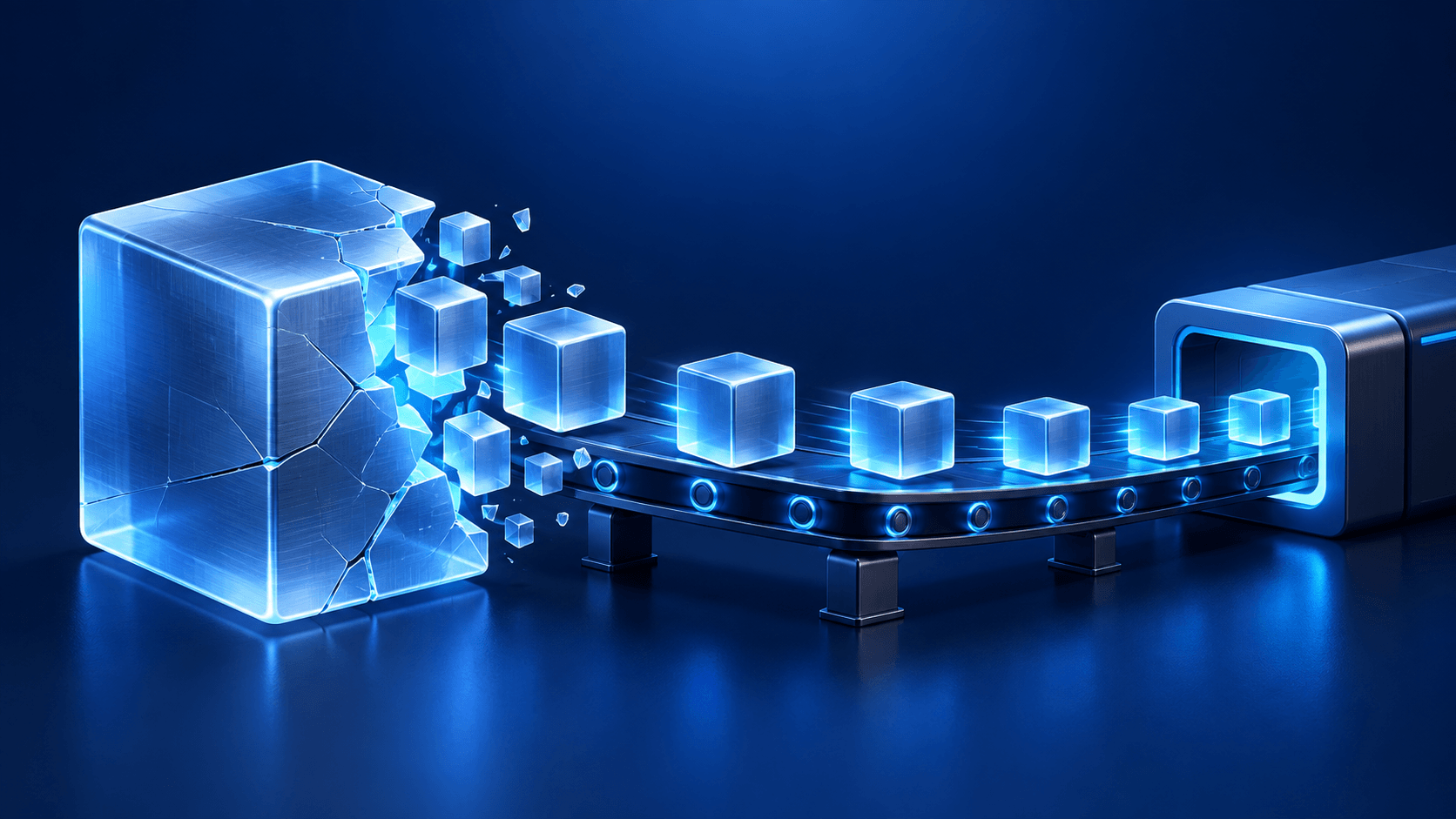
Engineering leaders are discovering a new imbalance: code can be generated faster than experienced people can understand, challenge, and approve it.
This is not an argument against AI-assisted development. It is a capacity-planning problem.
DORA reports that teams with fast code reviews have 50% better software delivery performance. Anthropic has also described human code review as an emerging bottleneck as AI increases the amount of code moving through its organization. If generation accelerates while validation remains unchanged, work simply piles up at a different stage.
Stop measuring the wrong productivity
Lines of code, prompts completed, and pull requests opened are production measures—not outcome measures. Track the full path:
- time from change ready to first review;
- review cycles per change;
- batch size;
- escaped defects and security findings;
- rework after deployment; and
- time from approved intent to verified production behavior.
If generated output rises while lead time and rework worsen, the system is not more productive.
Reduce the review surface
Start with smaller, single-intent changes. Require the author—human or agent—to provide:
- the reason for the change;
- the important design decisions;
- files and behaviors affected;
- tests and evaluation evidence;
- security or data implications;
- known limitations; and
- rollback or disable procedure.
Do not ask reviewers to rediscover the purpose by reading thousands of changed lines.
Automate evidence, not approval
Move repeatable checks into the delivery path:
- compilation, types, schemas, and contracts;
- unit, integration, regression, and property tests;
- dependency, secret, and vulnerability scanning;
- policy checks and infrastructure validation;
- UI screenshots or interaction recordings; and
- performance comparisons where relevant.
AI can provide a preliminary review, summarize a diff, locate risky areas, or challenge tests. It should not be the only reviewer of its own output.
Review by risk
Not every change deserves the same human attention.
A copy update behind a content system does not need the same path as a payment calculation, authentication change, data migration, or infrastructure policy.
Create review tiers based on data sensitivity, authority, reversibility, blast radius, novelty, and customer consequence. Let automation clear routine evidence. Direct experienced reviewers toward architecture, business logic, security boundaries, and irreversible decisions.
Protect reviewer capacity
Review is real work. Allocate it in planning, establish response expectations, rotate responsibility, and reduce work in progress when queues grow. Pair domain experts with engineers on changes where technical correctness is not enough.
Senior talent becomes more important when implementation gets cheaper. Research based on roughly 400,000 Claude Code sessions found that greater domain expertise improved success and recovery, while people typically made the planning decisions and the agent handled more execution.
The answer is not to remove human review. It is to make human attention count.
Cayru helps teams redesign AI-assisted delivery around small changes, automated evidence, risk-based review, and senior engineering ownership.
Measure the review queue for one product and remove its largest source of avoidable delay.